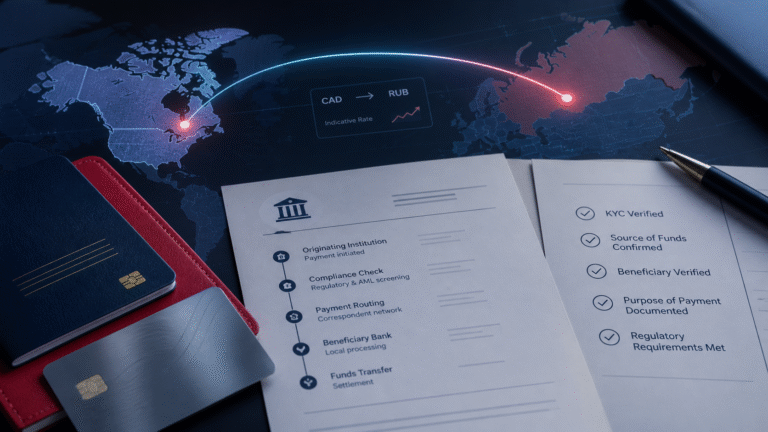
Short answer: Western Union does not currently operate money transfers to Russia through its normal consumer network. If you need to support a person, pay a recipient, or settle a Russia-related obligation in 2026, treat Western Union as unavailable and check a compliant alternative route before you send.
That answer matters because many people still search for a Western Union counter, app transfer, cash pickup, or card payout only after a bank payment has failed. Russia payments now depend on the sender country, recipient bank, payment purpose, currency, documents and sanctions screening.
NoWALL helps check the route before money moves. Instead of asking whether one familiar brand works everywhere, share the sender country, recipient details, payment purpose and preferred currency. The team can review realistic options, explain likely return points and help you prepare the details a bank or payment partner may ask for.
Does Western Union send money to Russia in 2026?
For practical purposes, no. Western Union announced that it suspended operations in Russia and Belarus in 2022. In 2026, that means a normal Western Union transfer to a Russian cash pickup point, Russian bank account, Russian card or ruble payout should not be your working plan.
The important distinction is between a brand name and a payment route. A sender may remember Western Union as a cash-transfer network, but the actual route still needs local payout partners, banking relationships, compliance approval and a recipient-side acceptance path. If those pieces are not available for Russia, the transfer cannot be treated like a normal domestic or international remittance.
Before trying another provider, check the same fundamentals: who is sending, who is receiving, which bank or card is involved, what the payment is for, and whether the route can explain the transaction in a way that the sending and receiving institutions can process.
What changed with Western Union and Russia?
Western Union’s public Russia and Belarus notice explains the suspension of operations following the full-scale invasion of Ukraine. That notice is still the safest starting point because it comes from the provider itself rather than from comparison pages that may show stale transfer widgets.
The practical result is simple: if a website, old blog post or forum thread suggests using Western Union for Russia, verify the date and the actual payment flow. A historical page may describe a route that no longer exists. A generic «send money internationally» page may not mean Russia is supported. A transfer form can also stop the transaction after country, recipient or compliance checks.
This is why NoWALL articles treat Western Union as a failed-route question, not as an ordinary provider comparison. The reader’s real problem is not choosing between two active brands. It is finding a route that can survive screening and reach the recipient without creating unnecessary return risk.
Western Union alternatives for Russia payments
There is no single replacement that works for every sender and every Russian recipient. A route that is possible for a family-support transfer may not fit a business invoice. A route that works for one recipient bank may fail for another. Use this table as a decision framework, not as a promise that a payment will clear.
| Option | When it may fit | What to check first | Main risk |
|---|---|---|---|
| Specialist payment-route check | Personal support, recipient-card payout, business payment or invoice where mainstream providers are unavailable. | Sender country, recipient bank or card, purpose, amount, documents and expected currency. | The route can still be rejected if details, bank status or payment purpose do not pass checks. |
| Bank transfer through an allowed correspondent route | Documented payments where both banks and intermediaries can process the corridor. | Sanctions screening, bank acceptance, payment purpose wording, fees and return handling. | Delays, manual compliance review or return after an intermediary bank review. |
| Recipient-side ruble payout to bank account or card | When the recipient needs usable rubles in Russia rather than foreign currency abroad. | Recipient name, bank, card or account details, currency conversion and local acceptance. | Currency conversion spread, unsupported bank/card or blocked payout path. |
| Business invoice payment route | Supplier, contractor, professional service or company invoice with supporting documents. | Contract, invoice, goods or services description, counterparty screening and tax/compliance paperwork. | Higher scrutiny than personal support transfers and more documentation requests. |
| Crypto-to-ruble route | Only for users who understand custody, exchange risk and local compliance obligations. | Legality in the sender country, platform reliability, recipient preferences, conversion fees and recordkeeping. | Volatility, fraud risk, account freezes, weak documentation and regulatory exposure. |
Why a Western Union transfer to Russia may fail
When a transfer route is no longer supported, failure can appear at different moments. Sometimes Russia is simply not available in the country selector. Sometimes the provider accepts initial details but blocks the transaction during screening. Sometimes the sender’s bank questions the payment before funds leave. Sometimes the recipient-side bank or payout path is the weak point.
Provider availability
The first check is whether the provider officially supports Russia. Western Union’s own notice should carry more weight than an old review, forum answer or advertising page. Wise also publishes Russia restrictions, which is useful when comparing mainstream consumer providers that many people try after Western Union.
Sanctions and bank screening
Russia-related payments are screened by banks, payment companies and sometimes intermediary institutions. US readers should review OFAC guidance, including the personal remittance FAQ. EU readers should also consider European Commission guidance on payment services and Russia sanctions. The point is not to self-diagnose a legal conclusion from one paragraph, but to know which questions a bank or provider is likely to ask.
Recipient bank or card acceptance
A route is only useful if the recipient can actually receive and use the money. Some recipients ask for a bank card, some need a bank-account transfer, some need rubles, and some can receive only through specific local arrangements. The sender should not assume that a payment method that works in one country or for one bank will work for every Russian recipient.
What details should you collect before choosing an alternative?
Good preparation reduces failed attempts. It also helps a payment specialist or bank give a clear answer faster. Collect these details before sending money:
- Sender country, sender currency and whether the sender is an individual or business.
- Recipient full legal name exactly as used by the bank or card issuer.
- Recipient bank name, account or card details, and preferred receipt currency.
- Payment purpose: family support, personal transfer, salary, freelancer fee, supplier invoice, refund or another clear reason.
- Amount, frequency and whether this is a one-time payment or recurring need.
- Supporting documents such as invoice, contract, employment document, family-support explanation or proof of source of funds if relevant.
- Any previous failed transfer details, including provider name, date, rejection message and whether the money was returned.
For business payments, do not treat the invoice alone as enough. The route may need a contract, payment purpose wording, counterparty details and a basic sanctions-screening trail. For personal payments, a clear relationship and purpose can matter when the sender’s bank asks why the money is moving.
How NoWALL checks a Russia payment route
NoWALL’s useful role is route verification before the sender commits funds. The check starts with the practical facts: where the money starts, where it needs to land, who is involved, what the recipient needs in Russia and what documents support the payment.
From there, the question becomes narrow and operational: is there a plausible path for this sender, this recipient and this purpose? If there is, the next step is to prepare the details cleanly, avoid vague payment descriptions and understand the possible delays or return points. If there is not, the sender should know that before starting a transfer through a random provider.
This is especially important after a Western Union search because the brand memory can create false confidence. The safer workflow is to verify current support, then compare real route options, then send only when the documentation and recipient details are ready.
Compliance and risk notes for 2026
Sending money to Russia is not one uniform category. A small personal-support payment, a salary transfer, a supplier invoice and a payment to a sanctioned party are different risk profiles. A route that appears technically possible can still be inappropriate if the recipient, bank, goods, services or payment purpose creates a sanctions or compliance problem.
Use official sources for the rules that apply to your jurisdiction. OFAC publishes Russia-related sanctions information for US persons and institutions. The European Commission publishes guidance for EU sanctions and payment-service restrictions. Provider pages from Western Union and Wise are useful for provider availability, not for every legal question.
Keep your language accurate. Do not describe a business invoice as family support. Do not split payments to hide the purpose or amount. Do not use a third party if the real recipient or purpose would fail screening. Those choices can create bigger problems than a simple rejected transfer.
Internal guides that help next
If your question is broader than Western Union, start with the 2026 guide to sending money from Europe to Russia or the legal-check guide, Is It Legal to Send Money to Russia in 2026?. If you already tried Wise, read Does Wise Work in Russia in 2026?. Country-specific senders can also compare the current guides for the USA to Russia, UK to Russia and Germany to Russia.
Authoritative sources
- Western Union notice on Russia and Belarus
- Wise restrictions for customers based in Russia
- OFAC FAQ 1202 on certain Russia-related personal remittances
- OFAC Russia-related sanctions FAQ topic page
- European Commission guidance on payment services and Russia sanctions
FAQ
Can I send cash to Russia with Western Union in 2026?
You should treat Western Union cash pickup in Russia as unavailable. Western Union publicly suspended operations in Russia and Belarus, so a normal cash-transfer plan should be replaced with a current route check.
Can a Russian recipient receive Western Union through another country?
Do not rely on workaround assumptions. The recipient’s location, identity, bank, payout point and payment purpose can all trigger checks. If the real need is to get money to a person in Russia, verify a route built for that situation.
Is Wise a direct Western Union alternative for Russia?
Usually not. Wise also publishes Russia restrictions, so it should not be treated as a simple replacement for Western Union. It can be useful as a comparison point when explaining why mainstream consumer providers fail.
What is the safest first step after Western Union is unavailable?
Collect the sender country, recipient bank or card details, payment purpose, amount and documents. Then check whether a compliant route exists for that exact case before sending funds.
Can NoWALL help with business invoices to Russia?
NoWALL can review the payment scenario and route requirements, but business payments usually need more documentation than personal support transfers: invoice, contract, counterparty details and a clear payment purpose.
Freshness note
This article was prepared on July 9, 2026. Provider availability, sanctions guidance and bank compliance rules can change, so check the linked official sources and the recipient’s current bank details before starting a payment.